
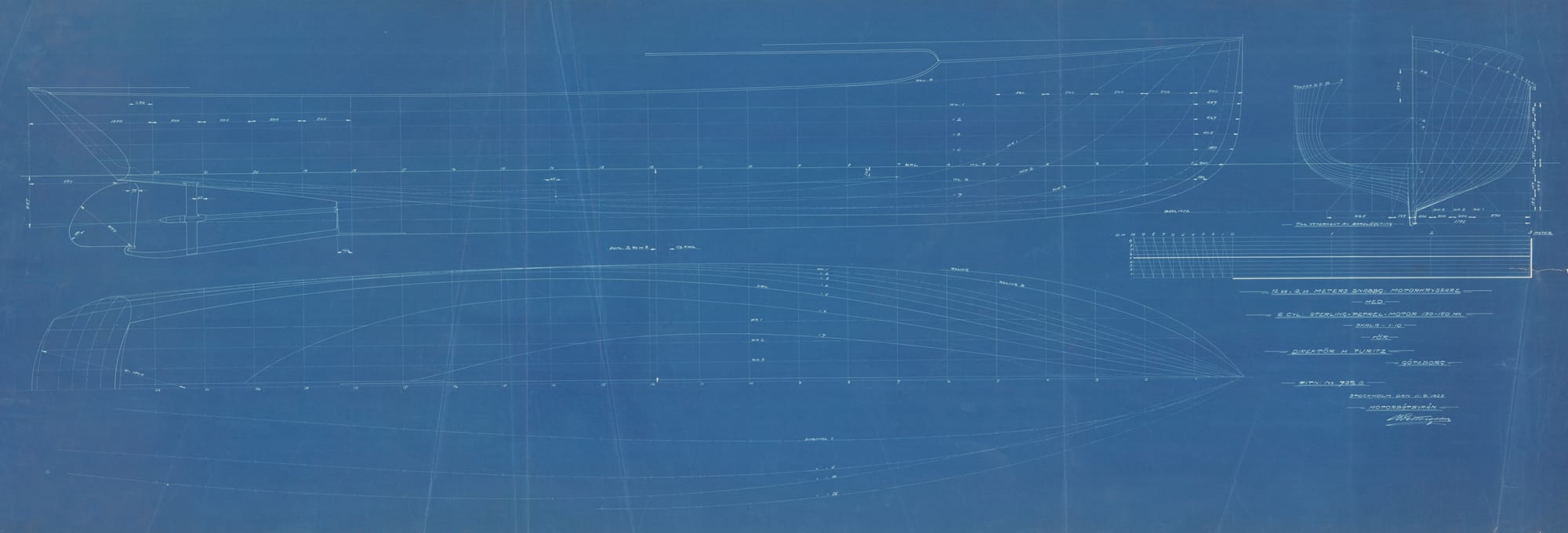
It is hard to talk about the history of the Swedish motorboat without sooner or later arriving at Carl Gustaf Pettersson.
Born in 1876, he grew up among the islands around Vaxholm, where boats were not primarily objects of leisure but an obvious part of everyday life. For a young person with a technical eye and a feel for form, there were few better places to grow up. Pettersson trained as an engineer, apprenticed in a boatbuilding environment and then began drawing his own designs.
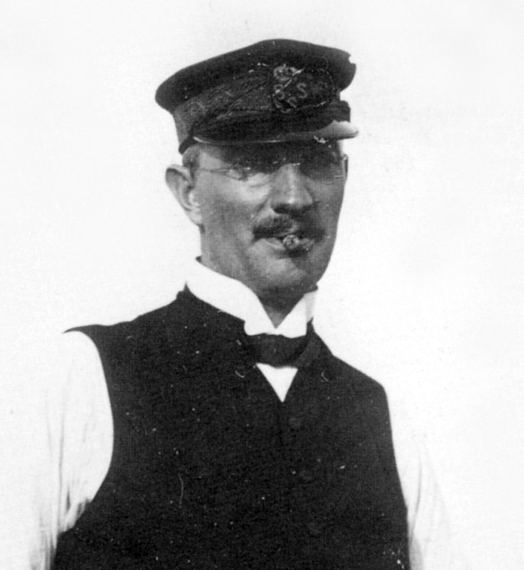
His boats were admired not simply because they were beautiful, but because they worked. They were long and narrow, easily driven, relatively fast and often surprisingly seaworthy for their size and power. At a time when engines were still expensive, heavy and limited, an easily driven hull was not an aesthetic choice but a technical necessity.
A new kind of boat for a new age
Pettersson designed for a period when Sweden was changing fast. In the early 1900s the motorboat began to shed its role as a pure working craft and became an object of leisure and prestige. Industrialisation created new fortunes, the cities grew and boating became accessible to more people. As engines improved, a new category of owner emerged, one who wanted to travel farther and more comfortably than sail or the steam launch allowed.
His boats were modern without being brutal. The long stem, the low profile, the generous foredecks and the balanced superstructures gave them a look that is still easy to recognise. The term Pettersson boat is now applied to far more boats than he drew himself. The National Maritime Museum describes him as Sweden's most famous motorboat designer.
A thousand drawings and a long voyage
Pettersson's output was vast. He drew well over a thousand designs: leisure boats, service craft, saloon boats, fast motorboats and larger motor yachts. They were built at many different yards around the country, which gave the boats varying character depending on client, yard and choice of engine.
One of the best-known boats in his own story is Wiking X, built in 1925 at the initiative of the Penta works, who needed to show what their new engine could do. That same year Pettersson set out on a celebrated voyage from Stockholm to Narvik, after which the boat was carried by rail to Luleå for the final leg along the Gulf of Bothnia. Wiking X is today part of the National Maritime Museum's collections.
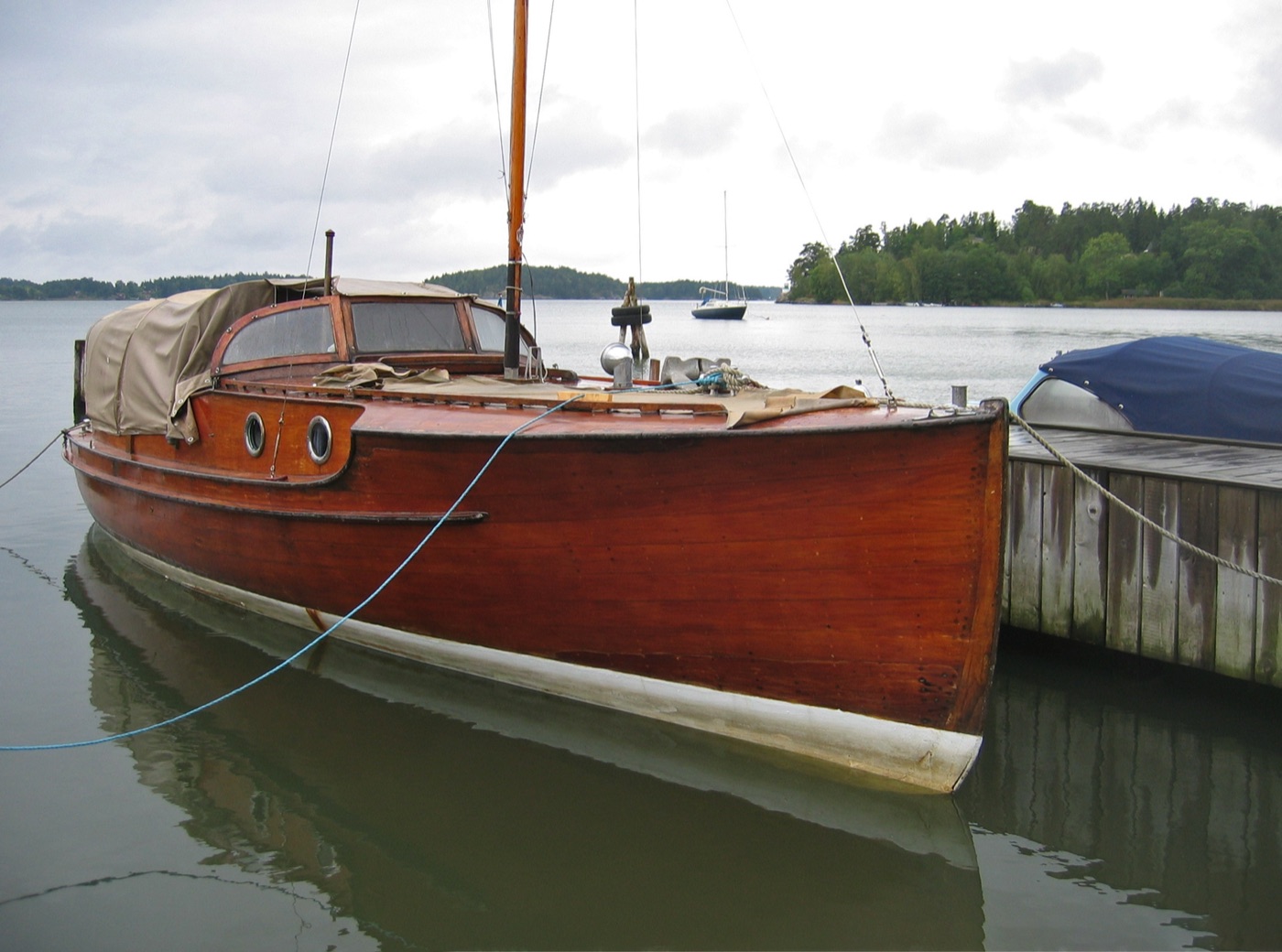
It says a great deal about him. He was not only an engineer at the drawing board but a practitioner and user of his own ideas. To set out on such a voyage in a newly built motorboat in 1925 was a way of showing that the modern motorboat could be used in earnest, over long distances and in varying conditions.
When IAN was drawn
By the time IAN was designed, Pettersson was in a mature phase of his career. For several decades he had refined his type of fast motorboat and motor yacht. IAN is therefore not an early experiment but a design from a period when he had deep experience of how hull, weight, power and interior should work together.
It shows in the original drawings. IAN is long, slim and well proportioned, drawn for speed but also for use. The saloon, galley, heads, berths and the placing of the engine room show that she was not a simple day boat but a private motor yacht built for longer journeys and comfortable life on board.
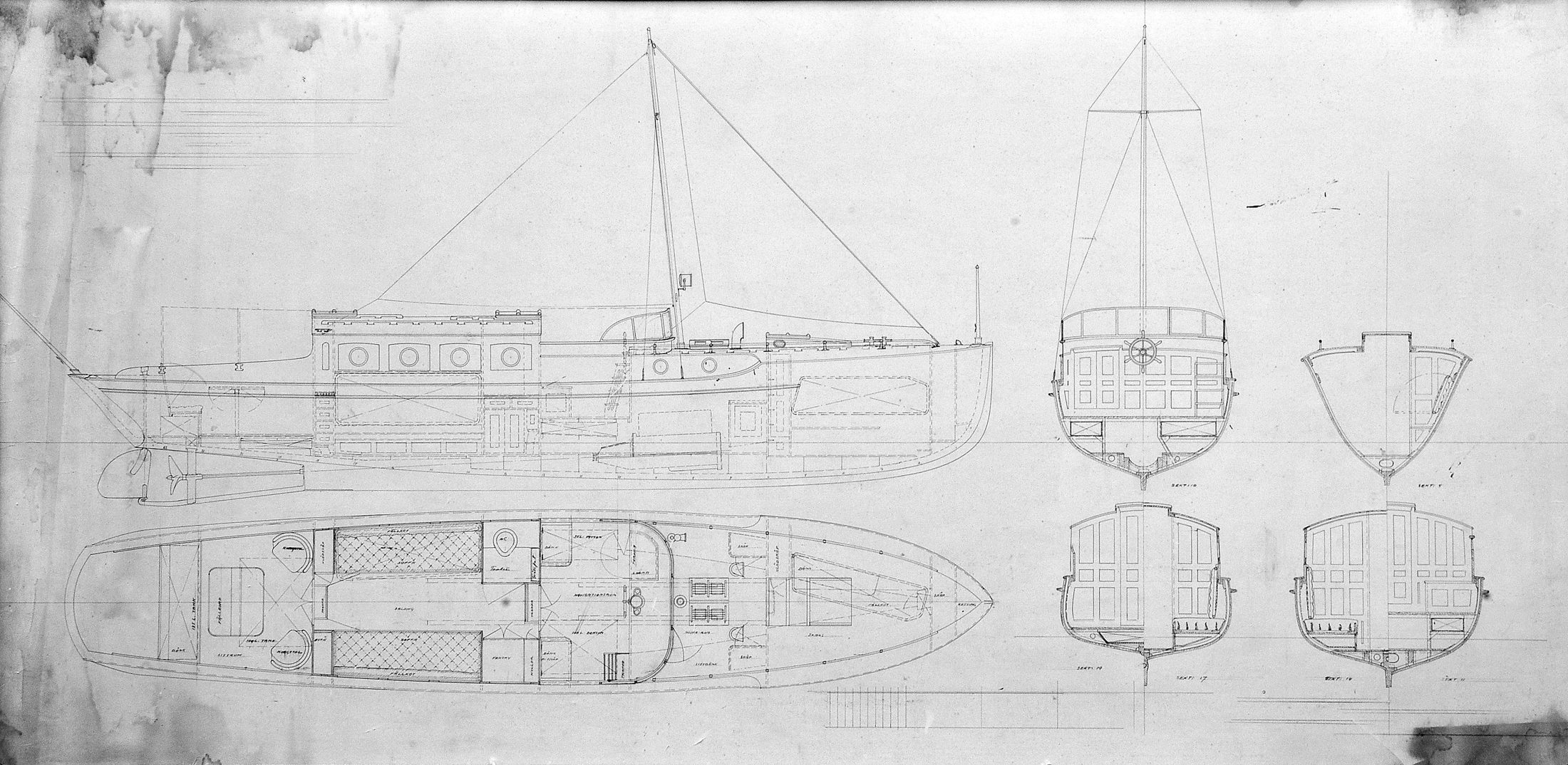
A long, slim Pettersson boat does not perform well by chance. The lines of the hull, the centre of gravity, the position of the engine and the angle of the propeller shaft all have to work together. That is why the original drawings of IAN are so valuable. They show not just how she looked, but how she was meant to work.
A heritage still in use
Today more than forty C.G. Pettersson designs have been heritage-listed through the National Maritime Museum's work with leisure craft. IAN is one of them. She is not just an old wooden boat, but a preserved design by one of Sweden's most important boat designers.
His boats are interesting not only because they are old, but because they still work. The lines are not nostalgic decoration; they are the result of practical judgement. Low weight, little wave-making, good speed and reasonable fuel consumption mattered as much then as now.
C.G. Pettersson died in 1953, but his influence on Swedish boat culture is still tangible. In 2026 the 150th anniversary of his birth is being marked. IAN is part of that story. She was built to his drawings and has survived through owners who kept using, caring for and repairing her. That may be the most Pettersson-like quality of all: that the boat is still there for the sea.